
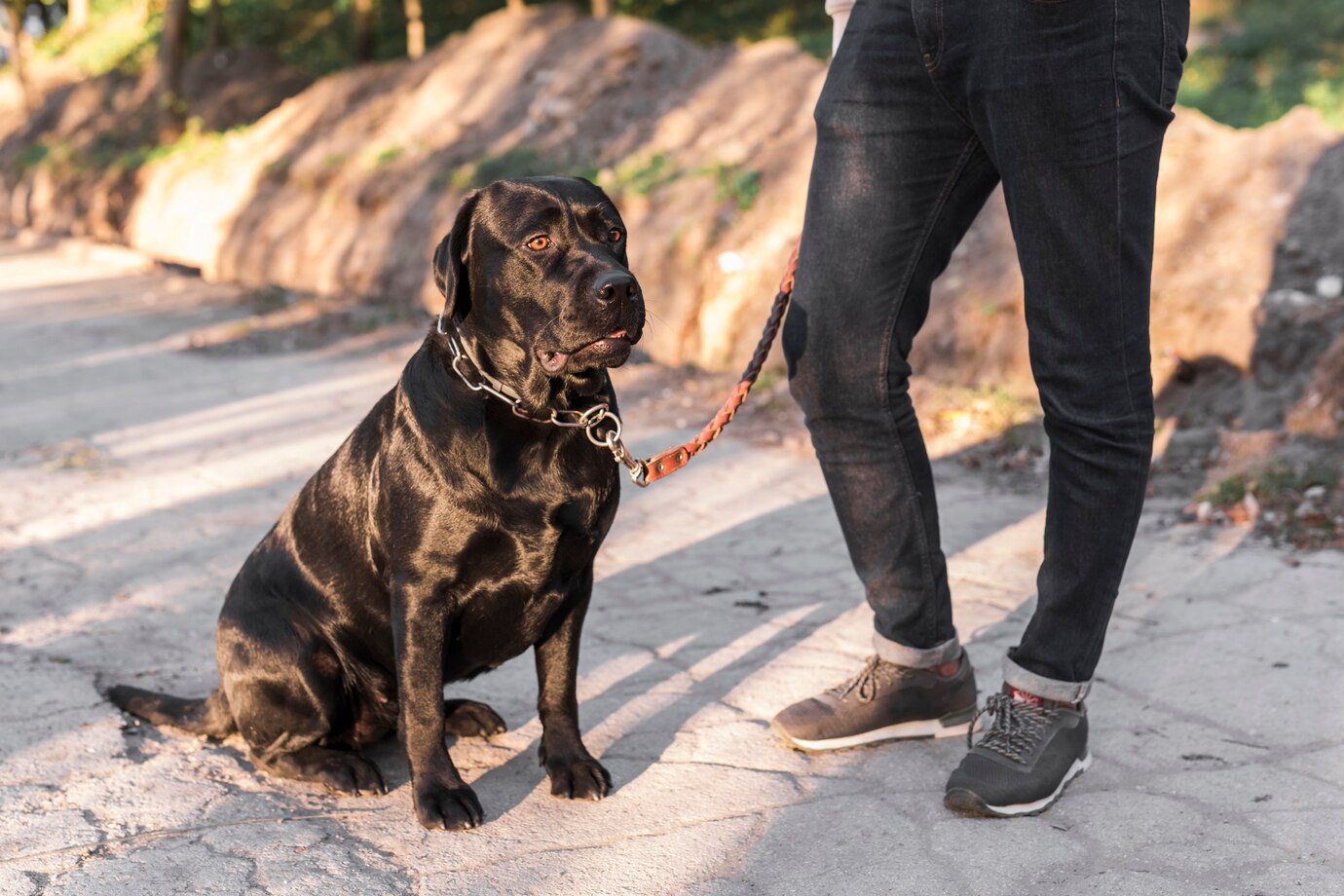
What Leash Reactivity Looks Like and Why It Happens
You are walking your dog on a quiet street in Waynesville when another dog appears around a corner. Suddenly, your calm companion transforms into a barking, lunging, pulling force that nearly takes you off your feet. The other dog owner gives you that look — part judgment, part pity — and you feel embarrassed, frustrated, and helpless.
If this sounds familiar, your dog is leash reactive, and you are not alone. Leash reactivity is one of the most common behavioral issues dog owners face, and it is also one of the most misunderstood.
Leash reactivity is not aggression in most cases. It is a stress response. Your dog sees a trigger — another dog, a person, a bicycle — and feels a surge of emotion they cannot manage. Because they are on a leash and cannot flee or properly investigate, that emotion comes out as barking, lunging, and pulling. The leash itself creates the problem by removing your dog’s ability to manage the situation on their own terms.
The Three Root Causes of Leash Reactivity
Fear
The most common cause of leash reactivity is fear. A dog that did not receive adequate socialization during their critical developmental period (roughly 3 to 16 weeks of age) may be genuinely frightened by unfamiliar dogs, people, or objects. The barking and lunging is defensive — it is the dog’s way of saying “stay away from me” because they cannot physically retreat.
Fear-based reactivity usually includes body language like tucked tails, ears pinned back, and attempts to increase distance from the trigger. The lunging is an offensive-looking behavior with a defensive motivation.
Frustration
Some leash-reactive dogs are not afraid at all. They are frustrated. They want to get to the other dog or person and the leash is preventing them from doing so. This is common in social dogs that have been allowed to greet every dog they see and now become frantic when they cannot.
Frustration-based reactivity often includes whining, spinning, and a generally “excited” demeanor rather than the tense, defensive posture of fear-based reactivity. The dog’s body language says “I want to get there” rather than “stay away.”
Learned Behavior
Over time, reactivity becomes a habit regardless of its original cause. The dog learns that barking and lunging makes the scary thing go away (because the trigger usually keeps walking past) or that their owner will eventually give in and let them approach. The behavior is reinforced by its own consequences, and it becomes more entrenched with each repetition.
Why Punishment Makes Reactivity Worse
The instinct most owners have when their dog reacts is to correct them — yank the leash, say “no,” or use a correction device. This approach almost always makes the problem worse. Here is why.
When your dog sees another dog and feels fear, and then they also experience pain or discomfort from a correction, the association they build is: other dogs = bad things happen. You are not teaching them to be calm. You are confirming their fear that other dogs are something to be worried about.
Even in frustration-based reactivity, punishment teaches the dog that the presence of other dogs leads to negative experiences. This can actually convert frustration-based reactivity into fear-based reactivity — a worse outcome.
Evidence-Based Approaches That Actually Work
Counter-Conditioning
Counter-conditioning changes your dog’s emotional response to their trigger. Instead of feeling fear or frustration when they see another dog, you teach them to feel positive anticipation.
The process is straightforward: every time your dog notices their trigger at a distance where they can still remain calm, you feed them high-value treats. The trigger appears, treats appear. The trigger goes away, treats stop. Over many repetitions, the dog learns that the trigger predicts good things, and their emotional response shifts from negative to positive.
The critical detail is distance. You must start at a distance where your dog notices the trigger but does not react. If your dog is already over threshold — barking and lunging — you are too close and the exercise will not work.
Desensitization
Desensitization works alongside counter-conditioning by gradually reducing the distance between your dog and their trigger. You start far away, get reliable calm responses with counter-conditioning, and then decrease the distance by small increments. The pace is determined by your dog, not by your schedule.
A common mistake is moving too fast. If your dog reacts, you have decreased the distance too quickly. Back up, get calm responses again, and proceed more gradually.
Teaching an Alternative Behavior
One of the most practical approaches is teaching your dog to perform a specific behavior when they see their trigger. A popular choice is “look at me” — your dog sees the trigger and immediately turns to make eye contact with you instead of fixating on the trigger.
This works because it gives the dog a clear job to do when they feel the surge of emotion. Instead of “I see a dog and I do not know what to do so I bark,” the pattern becomes “I see a dog and I look at my handler because that is what I have been trained to do.”
Managing the Environment While You Train
Behavior modification takes time — weeks to months depending on the severity of the reactivity. While you are working on the underlying issue, you also need to manage your dog’s daily life to prevent the reactivity from being rehearsed.
Choose walking routes carefully. Avoid high-traffic areas where surprise encounters are likely. Walk during off-peak hours when you can maintain the distance your dog needs.
Create distance when you see triggers. Cross the street, step behind a car, or turn around. There is no shame in avoiding a trigger during training. You are being a good handler, not a weak one.
Use a front-clip harness. A harness that clips at the chest gives you more physical control and prevents your dog from building momentum during a lunge, reducing the reinforcement the behavior provides.
When Professional Help Is Necessary
If your dog’s reactivity involves actual aggression — baring teeth, snapping, or attempts to bite — professional help is not optional. That level of behavior is beyond what most owners can safely address on their own.
Even for milder reactivity, professional training can dramatically accelerate progress. At Liberty K9, leash reactivity is a behavioral issue we address regularly through our private lessons and board and train programs. Dakota Tuck’s background as a Police K9 handler means he has extensive experience reading canine body language and modifying behavior in dogs under stress — the exact skill set that leash reactivity requires.
The Path Forward
Leash reactivity is frustrating, but it is manageable. With the right approach — counter-conditioning, desensitization, and environmental management — most reactive dogs can learn to walk calmly past their former triggers. It takes time, consistency, and patience, but the payoff is enormous: peaceful walks where you can actually enjoy spending time with your dog.
Struggling with a leash-reactive dog? Contact Liberty K9 at (513) 650-6342 or get in touch online. We work with reactive dogs across Waynesville, Lebanon, Springboro, and the surrounding Ohio communities.